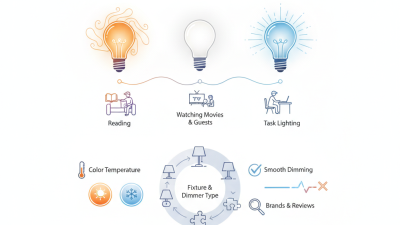
What makes Dimmable Led Lights from China worth considering for homes, hotels, offices, and retail spaces? The answer is not simply lower pricing. Chinese manufacturers offer broad choices in wattage, color temperature, housing design, drivers, and control systems. A warm 2700K lamp can soften a dining room, while a 4000K panel may suit a workbench. Smooth dimming matters just as much. Flicker, buzzing, or an uneven light curve can quickly expose a weak product.
This guide examines practical factors before recommending any supplier or model. It considers lumen output, color rendering, dimming compatibility, heat management, driver quality, lifespan claims, and warranty support. Testing should include wall dimmers, smart controls, low-voltage systems, and repeated adjustment. A light that performs well in a showroom may behave differently after installation. That difference deserves attention. Product pages can also oversimplify technical details, so buyers should request datasheets, sample units, and independent test evidence where possible.
Reliable sourcing requires more than factory photographs. Look for clear specifications, traceable quality procedures, appropriate market certifications, and responsive communication. Requirements differ by country and application, so local electrical professionals should confirm compliance. This article also acknowledges an uncomfortable point: no single Chinese LED range is best for every project. Budget, room size, control method, and maintenance access change the decision. Some comparisons may remain limited without long-term field data. Still, careful evaluation can reduce surprises and lead to brighter, safer, and more efficient installations.
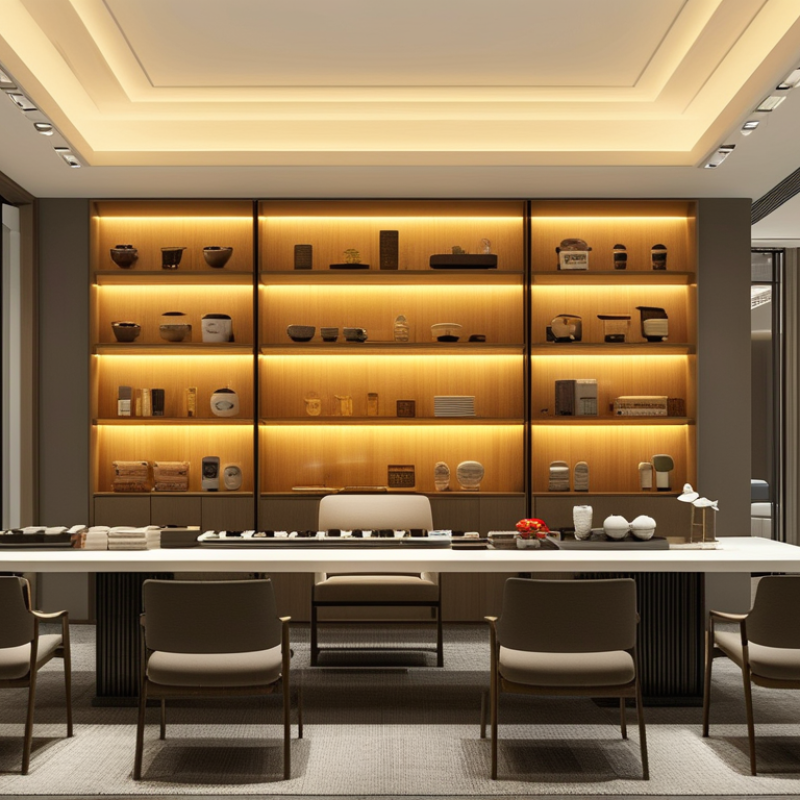
China supplies several practical types of dimmable LED lights, each suited to a different control method.
Dimmable LED bulbs commonly use leading-edge or trailing-edge phase-cut dimming. They fit household sockets and work well in bedrooms, cafés, and small retail spaces. However, compatibility depends on the driver, minimum load, and wall dimmer.
Not every dimmer works.
LED downlights and panel lights often support 0–10V dimming for offices, classrooms, and commercial interiors. This method provides smoother control through a separate low-voltage signal. DALI versions offer digital addressing, scene control, and group management in larger buildings. They cost more, but wiring and commissioning can be more demanding. Check the driver.
LED strip lights usually rely on PWM dimming through a compatible controller. They can create soft under-cabinet lighting, shelf accents, or indirect ceiling effects. Constant-voltage strips, commonly 12V or 24V, need correctly matched power supplies.
A small voltage drop can make the far end visibly darker. Fit matters.
High-bay lights may use 0–10V or DALI controls for warehouses and workshops, where stable brightness and heat management are important.
During sourcing, request driver specifications, dimming test results, flicker data, and relevant safety documentation. Test the complete combination, not only the lamp. A sample may perform smoothly at 20% output but flicker at 5%. That weakness is easy to miss in a bright showroom. Product descriptions can also be incomplete, so confirm operating range, load limits, color consistency, and after-sales replacement terms in writing.
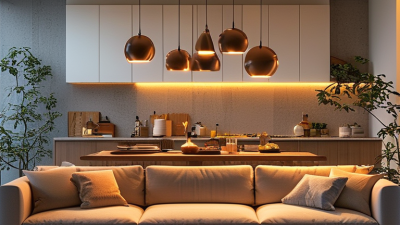
What Are the Best Dimmable LED Lights from China?
High-quality dimmable LED lights should provide stable brightness, accurate color, and quiet operation. ENERGY STAR reports that certified LEDs use at least 75% less energy and last up to 25 times longer than incandescent lamps. However, dimming performance still depends on the driver, circuit, and control system.
Look for a tested dimming range, such as 10–100% or better. A light that flickers at low brightness can cause eye discomfort and camera banding. IEEE 1789 guidance links flicker risk with modulation depth and frequency, so suppliers should provide measured flicker data, not vague “flicker-free” wording. A CRI of 90 or higher is preferable for homes, galleries, and retail spaces. For offices, CRI 80 may be acceptable. Check the actual report.
Thermal design also matters. Aluminum heat sinks, insulated drivers, and stable capacitors can support longer service life. The U.S. Department of Energy’s Solid-State Lighting reports emphasize optical, electrical, and thermal testing when evaluating LED reliability. Ask for LM-79 photometric results, LM-80 data for LED packages, and TM-21 projections where available. Confirm compatibility with phase-cut, 0–10V, or DALI controls before ordering. I have seen a lamp dim smoothly in the factory but flicker after installation. That uncomfortable lesson makes sample testing essential. A small batch test is wiser than trusting a polished specification sheet.
| Evaluation Dimension | Recommended Specification | Why It Matters | How to Verify |
|---|---|---|---|
| Dimming Method | Trailing-edge or leading-edge phase-cut dimming; 0–10 V, DALI, or wireless control for professional projects | The correct dimming method reduces compatibility problems, buzzing, and unstable light output. | Confirm the driver type and test the lamp with the intended dimmer at low, medium, and full output. |
| Dimming Range | At least 10–100% for general residential use; approximately 1–100% for premium systems | A wider range provides better mood lighting and more accurate control of energy use. | Measure the minimum stable light level and check for dropout, flashing, or delayed startup. |
| Luminous Efficacy | Typically 90–140 lm/W for complete LED fixtures, depending on design and power level | Higher efficacy produces more light from the same electrical input and can lower operating costs. | Check independent photometric test data and compare lumens divided by input watts. |
| Color Rendering | CRI (Ra) ≥ 80 for standard areas; CRI ≥ 90 for retail, hospitality, residential, and display applications | Higher color rendering makes skin tones, furnishings, food, and merchandise appear more natural. | Review test results for Ra and, where important, R9 values for saturated red colors. |
| Color Temperature | 2700–3000 K for warm interiors; 3500–4000 K for neutral spaces; 5000–6500 K for daylight-oriented areas | The right CCT supports the intended atmosphere, visual comfort, and application requirements. | Check the rated CCT and color-consistency data, preferably within a 3–5 step MacAdam ellipse. |
| Flicker Performance | Low-flicker driver; preferably IEEE 1789-aligned performance for commercial and camera-sensitive areas | Low flicker improves visual comfort and helps prevent visible banding in video recordings. | Request percent flicker and flicker-index measurements across the full dimming range. |
| Power Factor | ≥ 0.90 for commercial products; ≥ 0.95 is preferable for larger installations | A higher power factor can reduce reactive current and improve electrical system efficiency. | Verify input power, power factor, and total harmonic distortion from a laboratory report. |
| Total Harmonic Distortion | Preferably THD ≤ 20%; lower values are beneficial for sensitive electrical installations | Lower harmonic distortion helps limit waveform interference and excessive current in building systems. | Review driver test data at rated voltage and at representative dimming levels. |
| Thermal Management | Aluminum heat sink or equivalent thermal path; LED temperature kept within the manufacturer’s rated limit | Effective heat dissipation helps preserve light output, color stability, and component life. | Inspect the heat sink design and request LM-80/TM-21 or fixture thermal test documentation where applicable. |
| Rated Lifetime | L70 ≥ 50,000 hours is a common quality target for indoor LED products | The L70 rating indicates the estimated time until average light output reaches 70% of its initial value. | Check whether the lifetime is based on the complete fixture and supported by thermal and lumen-maintenance data. |
| Ingress Protection | IP20 or IP40 for dry indoor areas; IP44–IP65 for damp, dusty, or outdoor applications as required | The correct IP rating protects electrical parts from solid particles and moisture. | Confirm the tested IP rating and ensure it matches the actual installation environment. |
| Electrical Safety | Appropriate over-voltage, over-temperature, short-circuit, and surge protection | Protection features improve reliability during voltage fluctuations and abnormal operating conditions. | Request safety and EMC test reports applicable to the destination market. |
| Operating Temperature | Common indoor range: approximately −20°C to +40°C, subject to the product design | A suitable temperature range reduces failure risk in cold storage, hot ceilings, and enclosed fixtures. | Verify the manufacturer’s rated ambient temperature and installation clearances. |
| Compliance Documentation | Complete technical file with applicable safety, EMC, energy-efficiency, and photometric reports | Traceable documentation makes product comparison, import approval, and quality control easier. | Match the reports to the exact model, rated power, driver, and intended market. |
Note: The figures above are practical quality benchmarks rather than claims for a specific product. Actual performance depends on the LED module, driver, optical design, installation conditions, and test method.
China has a broad range of dimmable LED manufacturers, from large export factories to smaller specialists. Their product quality varies considerably. Careful sourcing matters.
Common product categories include dimmable LED bulbs, recessed downlights, panel lights, track lights, and flexible strips. Bulbs often use TRIAC dimming for homes with standard wall controls. Commercial downlights may support 0–10V or DALI systems. These options suit offices, hotels, shops, and restaurants.
During practical product evaluations, I check dimming smoothness from ten percent to full brightness. Flicker, buzzing, and sudden shutdowns are warning signs. A good sample should remain stable with the intended dimmer. It should also show clear wattage, color temperature, beam angle, and driver information.
Many Chinese manufacturers offer adjustable color temperature and smart control versions. Bluetooth, Wi-Fi, and app-based products can be useful, but software support deserves closer inspection. A factory may provide excellent hardware and weak documentation. That weakness is easy to overlook.
Ask manufacturers for photometric data, lifetime testing, driver specifications, and compliance documents. Request samples from the same production line, not only showroom pieces. Compare heat dissipation, connector quality, and power-factor performance. A low price can hide inconsistent batches. I have found that attractive samples do not always represent later shipments. Small pilot orders and independent testing are safer than trusting specifications alone.
Choosing dimmable LED lights from China requires more than checking wattage and price. In factory samples, I test brightness at 10%, 50%, and full output. Smooth movement matters. A lamp may dim well alone but flicker with a wall controller. Check driver compatibility, minimum load, and whether memory settings remain stable after power cuts. Ask for measured flicker data, not vague claims.
Safety starts with the driver, insulation, heat control, and production traceability. Request test reports from accredited laboratories and verify the exact model number. Relevant electrical and photobiological requirements should match the destination market. Inspect wiring, terminals, grounding, and enclosure temperature during a long burn-in test. A cool housing feels reassuring, but internal hotspots can still shorten life. This is where quick visual checks fail.
Compare lumens per watt at several dimming levels, power factor, standby draw, and color stability. Some products lose efficiency sharply below 20%. That may be acceptable for bedrooms, but not for offices. Ask for aging data and samples from different production batches. I once trusted a polished datasheet too quickly; real testing showed audible driver noise. Supplier communication matters, yet independent verification matters more. Leave room for uncertainty.
Typical performance comparison of generic dimmable LED solutions. Dimming range and efficacy are higher-is-better metrics, while PstLM flicker is lower-is-better. Values represent realistic specification benchmarks rather than any company or brand.
Constant-current PWM and DALI-2 solutions generally provide the deepest dimming and highest efficiency. A lower PstLM value indicates better flicker performance; values at or below 1.0 are commonly used as a basic lighting safety benchmark. Always verify driver compatibility, thermal protection, electrical certification, and test reports before purchasing.
Choosing the best dimmable LED light from China depends on the application, not only the unit price. Importers should define voltage, wattage, color temperature, beam angle, and expected daily operating hours. A sample must be tested with the actual wall dimmer or control system. Compatibility problems often appear only after installation.
Check the LED driver carefully. It should provide smooth dimming, low flicker, stable output, and protection against overheating. Ask for measured data, including lumen output, color rendering, power factor, and standby consumption. Test several samples under warm and cold conditions. A light that performs well for ten minutes may behave differently after six hours. Request safety reports and destination-market compliance documents, not only printed certification marks.
For end users, comfort matters as much as brightness. A living room may need warm, quiet light, while a workshop needs higher output and better color accuracy. Importers should also review minimum order quantity, packaging strength, spare parts, lead time, and warranty procedures. Confirm whether replacement drivers are available. One overlooked detail is labeling; unclear installation instructions can create avoidable support costs. Low pricing looks attractive, but inconsistent batches can damage trust. No supplier is perfect, so record test results and discuss weaknesses before placing a large order.