How to Choose the Best White Light Bulbs for Your Home
Choosing the best white light bulbs for your home can significantly impact energy efficiency and ambiance. Recent industry reports indicate that LED white light bulbs use up to 80% less energy than traditional incandescent bulbs. This statistic underscores the importance of making informed choices about lighting.
White light bulbs come in various types, including LED, CFL, and halogen. Each type has its benefits and drawbacks. For instance, while LED bulbs are more efficient, some consumers may find their upfront cost high. Research shows that consumers often overlook the long-term savings associated with lower energy bills.
Moreover, the right white light can enhance mood and productivity. A report by the International Energy Agency suggests that proper lighting impacts mental well-being. As you navigate through options, consider both the environmental impact and your personal preferences. Being informed means making choices that benefit your home and the planet.
Understanding the Different Types of White Light Bulbs Available
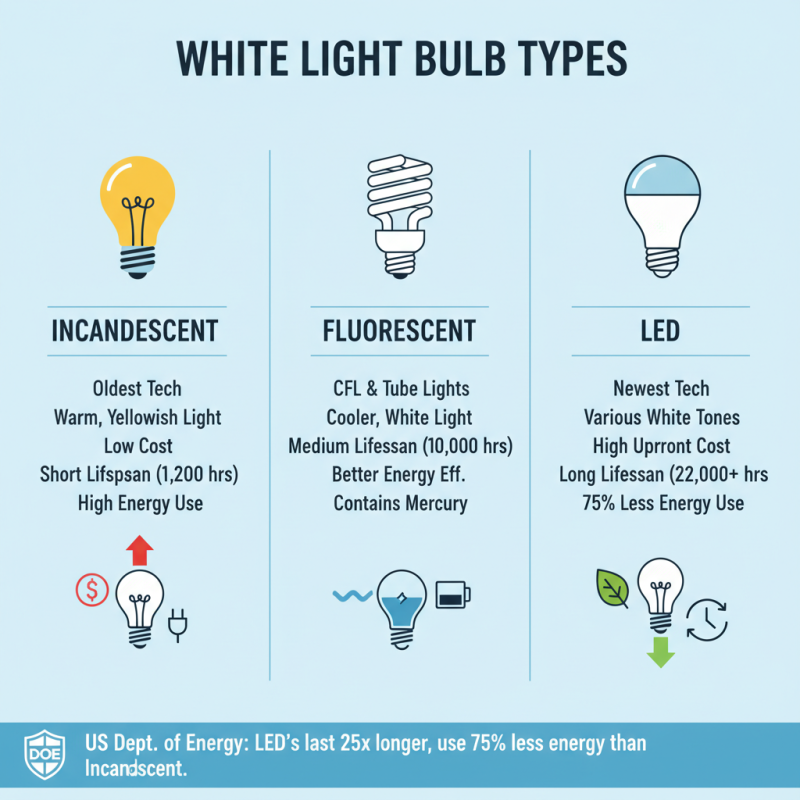
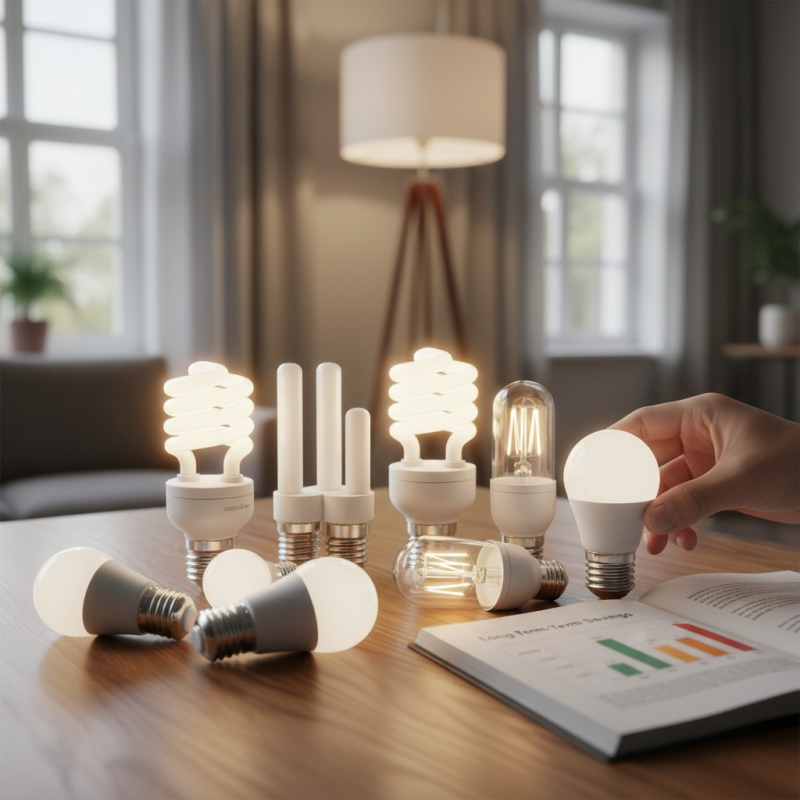
When it comes to white light bulbs, understanding the different types available is essential. There are mainly three types: incandescent, fluorescent, and LED. Each type has its characteristics, benefits, and drawbacks. A report from the U.S. Department of Energy reveals that LED bulbs use at least 75% less energy than incandescent bulbs. They also last about 25 times longer. However, the upfront cost of LEDs can be higher.
Incandescent bulbs provide a warm light but are highly inefficient. They convert much of the energy into heat, which not only wastes energy but also could lead to higher cooling costs in the summer. While they provide excellent color rendering, their lifespan is limited to about 1,000 hours.
Tips: Consider your space. For cozy areas like bedrooms, a warm white might be preferable. For task-oriented spaces such as kitchens, a cooler white light enhances visibility. Always check the lumen output for brightness. A bulb with 800 lumens is commonly used to replicate the brightness of a standard 60-watt incandescent bulb. Remember, personal preference plays a big role in choosing the right type. Don't hesitate to experiment before making a final decision.
Evaluating Brightness: Lumens vs. Watts in White Light Bulbs
When selecting white light bulbs, understanding brightness is crucial. Lumens measure brightness, while watts measure energy usage. Many still think more watts mean brighter light. This is outdated thinking. For example, a traditional 60-watt bulb usually emits around 800 lumens. However, newer LED bulbs provide the same brightness using only 10 watts.
Tips: Look for bulbs that provide the lumens you need, not the watts. Check brightness on the packaging. For cozy environments, choose bulbs around 2,700 to 3,000 lumens. For task-oriented spaces, like kitchens, opt for higher lumens, around 4,000 to 5,000.
The clarity of light matters. Warm white has a softer glow, while cool white is more vibrant. You may find it challenging to choose just the right tone. Take your time and test different bulbs before making a final decision. Your space deserves thoughtful lighting.
Considering Color Temperature: Finding the Right Shade of White Light
Choosing the right shade of white light is essential for creating the perfect atmosphere in your home. Not all white lights are the same. They vary significantly in color temperature, which can range from warm to cool tones. Warm white light (2700K-3000K) creates a cozy ambiance, ideal for bedrooms or living areas. In contrast, cool white light (4000K-5000K) feels more like daylight, making it suitable for kitchens or workspaces.
Tips: Test different bulbs in your space before making a decision. Take note of how the light interacts with your wall colors and furnishings. Lighting can drastically change the mood of a room. Make adjustments to achieve the desired effect.
Remember, the perfect shade for you may not work for someone else. It’s a personal choice based on your preferences and needs. Consider your lifestyle. Do you need bright light for tasks or a softer glow for relaxation? Explore the balance between functionality and comfort. The right lighting can enhance your daily experiences at home.
How to Choose the Best White Light Bulbs for Your Home - Considering Color Temperature: Finding the Right Shade of White Light
| Light Type |
Color Temperature (Kelvin) |
Brightness (Lumens) |
Best For |
| Soft White |
2700K - 3000K |
800 - 1600 |
Living Rooms, Bedrooms |
| Neutral White |
3500K - 4100K |
1000 - 1800 |
Kitchens, Workspaces |
| Daylight |
5000K - 6500K |
1000 - 2000 |
Bathrooms, Reading Areas |
| Cool White |
4100K - 5000K |
800 - 1600 |
Commercial Spaces, Garages |
| Full Spectrum |
5000K - 7000K |
1000 - 2200 |
Art Studios, Displays |
Assessing Energy Efficiency Ratings for White Light Bulbs
Choosing the right white light bulbs for your home can significantly impact energy consumption. Energy efficiency ratings are essential indicators to consider. The U.S. Department of Energy states that LED bulbs use at least 75% less energy than traditional incandescent bulbs. This substantial reduction can lead to lower energy bills over time.
When assessing energy efficiency, look for the ENERGY STAR label. This certification ensures that the bulb meets strict efficiency guidelines. According to the Energy Information Administration, lighting accounts for about 11% of residential energy use. Opting for ENERGY STAR certified bulbs can reduce this percentage significantly. You might wonder, do you really need that extra brightness? Sometimes, less is more.
Moreover, consider the lifespan of the bulbs. Many LED options last up to 25,000 hours. In contrast, incandescents might last around 1,000 hours. Switching to more efficient lighting can mean fewer replacements. However, the initial cost of energy-efficient bulbs can be higher. Reflect on whether the savings justify the upfront expense. Choosing the right bulb is not just a technical decision; it requires careful thought and consideration.
Choosing the Right Bulb Base and Compatibility for Your Fixtures
When choosing white light bulbs, the bulb base type is crucial. Most fixtures require a specific base type. Common bases include E26 (medium base) and GU10 (twist and lock). According to data from the Department of Energy, approximately 75% of homes use E26 base bulbs. This widespread use makes it easier to find compatible bulbs. However, some fixtures, like recessed lighting, may require GU10.
Checking the compatibility of fixtures and bulbs is essential. Many homeowners overlook this step. A report from Energy Star highlights that about 30% of people mistakenly assume all bulbs fit all fixtures. This can lead to frustration and wasted time. It’s important to assess your current fixtures before purchasing bulbs. Consider different light output levels. Good lighting can enhance mood and productivity. Opt for bulbs that provide adequate intensity to meet your needs.
Pay attention to wattage and lumens. Not all bulbs generate the same brightness. A higher lumen count means brighter light. Also, remember the color temperature, expressed in Kelvins. This affects your space's ambiance. A cooler light may feel sterile, while a warmer tone is often more inviting. Experimentation might be necessary to find your perfect match. Keep notes on what works and what doesn’t.
Comparison of Different White Light Bulb Types