Professional manufacturer
Innovating World Trade with Code
Contact us
Leave Your Message

7 Tips for Choosing the Best Ba9s LED Bulb?

Choosing a Ba9s Led Bulb is not just a matter of finding the brightest listing. The bulb must match the socket, available space, voltage, and intended use. A mismatch can mean poor fit, uneven light, or a bulb that does not work as expected. Small details matter. Measure the old bulb, check its base, and compare the product specifications with your vehicle or fixture manual.

There is a good reason to compare more than price. The U.S. Department of Energy’s Energy Saver guidance says LED bulbs use up to 90% less energy and can last up to 25 times longer than incandescent bulbs. Those figures describe LEDs broadly, not every Ba9s model. Actual performance varies with design and operating conditions. Look closely at lumen output, beam pattern, color temperature, heat management, and polarity before buying. Also check whether the seller gives clear dimensions and operating-voltage information. A bright product photo tells you little.

This guide outlines seven practical checks for narrowing your options. It considers fit, electrical compatibility, light quality, durability, and useful product documentation. Some listings provide impressive numbers but omit basic measurements. That should give you pause. Specs are helpful, yet they cannot always show how a bulb will illuminate a real dashboard or enclosed fixture. Compare the details, consult the manufacturer’s instructions, and choose a Ba9s Led Bulb suited to the actual application.
7 Tips for Choosing the Best Ba9s LED Bulb?

Identify the Ba9s Base Type and Socket Fit

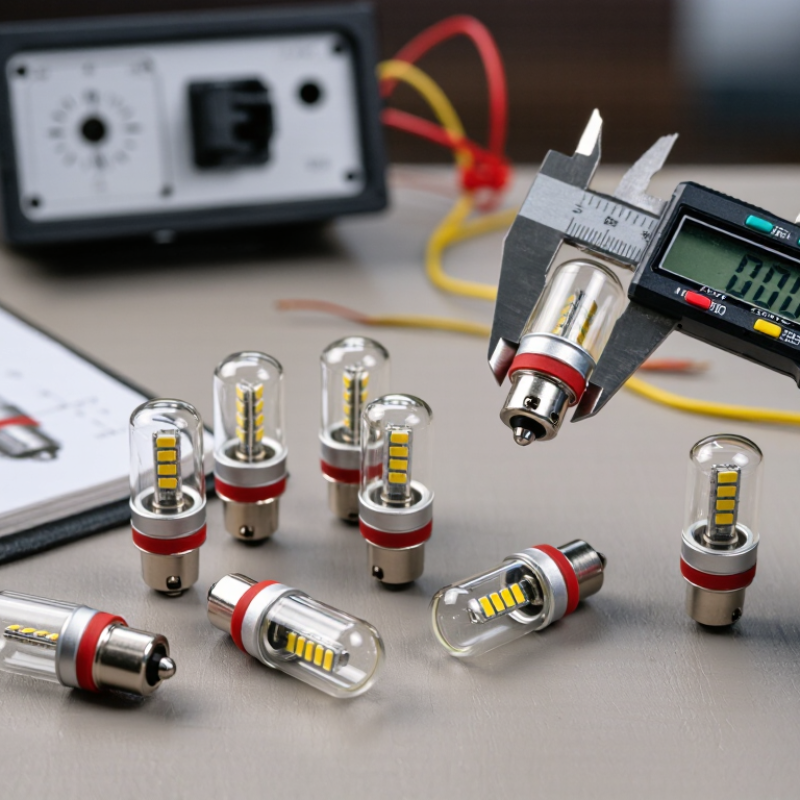
The Ba9s code describes a specific base, not a universal miniature fit. “BA” indicates a bayonet cap, “9” refers to its nominal 9 mm diameter, and “s” means one electrical contact. Check the lamp and socket markings, then compare the base with the old bulb. The two small side pins should enter the socket slots and lock with a gentle turn. Don’t force it. A base that almost fits can still sit crooked or make poor contact. This is easy to overlook.

Socket fit is only part of the check. Compare the replacement’s overall length and width with the available space, especially inside a narrow instrument panel or vehicle lamp housing. Confirm the specified voltage and inspect the socket for corrosion, loose contacts, or heat damage. Some LED replacements are polarity-sensitive, so a correctly seated bulb may still need its electrical orientation checked against the product instructions. I would not assume every Ba9s LED works in every Ba9s socket; vehicle wiring and socket condition vary.

The U.S. Department of Energy’s LED guidance reports that LEDs use at least 75% less energy and can last up to 25 times longer than incandescent lighting. Those figures describe LEDs broadly, not every Ba9s bulb. Verify the actual product rating. Small detail, big difference.

Match the Bulb’s Voltage to the Vehicle or Device

7 Tips for Choosing the Best Ba9s LED Bulb?
Match the Bulb’s Voltage to the Vehicle or Device

A Ba9s base describes the bulb’s fit, not its operating voltage. Check the old bulb, device manual, or socket label before buying. Many passenger vehicles use 12-volt systems, while some larger vehicles use 24 volts. The difference matters. A 12-volt-only LED connected to a 24-volt circuit may fail early, while an unsuitable low-voltage supply can cause dimming or flicker.

Check the LED’s stated input range, not just a “12V” label. Vehicle voltage can change while the engine runs, so the bulb’s operating range should suit the real electrical system. ISO 7637-2, an automotive electrical-transient standard, addresses disturbances on 12- and 24-volt vehicle supply lines. That is a useful reminder: vehicle power is not always a perfectly steady number. If the product specifies only one exact voltage, be cautious. I would verify the manual rather than assume.

For a practical check, compare the bulb’s voltage range with the device rating, then confirm polarity and available space. Some Ba9s LEDs have built-in drivers; others are less tolerant of voltage variation. A multimeter can help reveal the supply voltage, but measurement alone does not prove compatibility. Match the specifications. Fit the bulb, switch it on, and watch for flicker or unusual heat. Small details matter.

Compare Brightness, Color Temperature, and Beam Pattern

7 Tips for Choosing the Best Ba9s LED Bulb?

Tip: Check the base and bulb dimensions before buying. A Ba9s fitting must match the socket, and a bulb that is too long may not fit beneath the lens. Tip: Compare lumens, not watts, when judging brightness. Wattage describes power use; it does not show how much visible light reaches the road or work area. Small packages can make these figures hard to compare.

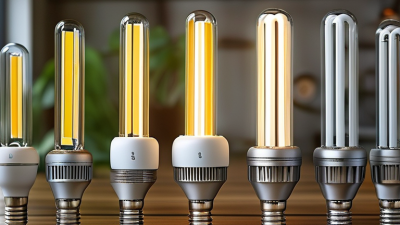
Tip: Choose color temperature for the setting. Around 3000K looks warm and can feel comfortable in foggy conditions, while cooler white light may make details appear crisper. Color preference is personal, though, and a higher Kelvin number does not mean a brighter bulb. Tip: Look at the beam pattern, not just the bulb face. LEDs often send light in specific directions, so a poor match for the reflector can create bright spots and dim areas. Check the fixture’s design when possible.

Tip: Confirm voltage and polarity requirements in the product specifications. Some LED bulbs may not work in every socket or vehicle circuit. Tip: Consider heat and available clearance; compact housings can trap warmth, and heat may affect performance. Tip: Test the beam after installation against a nearby wall. A slight rotation can sometimes improve the spread, but I would not assume every fixture allows adjustment. Compare the lit area, not just how bright the bulb looks when viewed directly.

7 Tips for Choosing the Best Ba9s LED Bulb? - Compare Brightness, Color Temperature, and Beam Pattern

Tip What to Compare Useful Facts and Checks Choosing Guidance
1. Confirm the base and fit Base type, bulb dimensions, and available space BA9s is a 9 mm bayonet base with one bottom contact. Check the fixture socket and compare the bulb’s length and width with the space available. Verify the base marking and dimensions before ordering; similar-looking bayonet bases are not always interchangeable.
2. Check operating voltage The bulb’s stated input-voltage range and the fixture supply BA9s describes the base, not the operating voltage. LED bulbs may be designed for different voltage systems, so the product specification must match the actual supply. Do not assume a bulb marked for one voltage will work correctly on another. Check the fixture label or manual.
3. Compare brightness in lumens Published lumen output and the brightness needed for the application Lumens measure visible light output; watts measure electrical power use. There is no single brightness level that suits every BA9s fixture. Compare lumen ratings rather than wattage alone, and consider the fixture’s lens, reflector, and intended use.
4. Select a color temperature Correlated color temperature (CCT), stated in kelvins (K) Around 2700–3000 K appears warm; around 4000 K appears neutral; around 5000–6500 K appears cool or daylight-like. These are common descriptive ranges, not guarantees of identical appearance. Choose a CCT that suits the task and matches nearby lighting when consistent appearance matters.
5. Match the beam pattern Beam angle, LED placement, and light distribution A compact LED may emit light differently from a filament bulb. Side-facing LEDs can help distribute light around the bulb, while a forward-facing arrangement may concentrate more light in one direction. For a reflector or directional fixture, check the beam description and confirm that the bulb points toward the area to be lit.
6. Check dimming and electrical compatibility Dimmability, dimmer type, and any driver or polarity requirements Not every LED bulb is dimmable, and compatibility can depend on the dimmer and circuit. Some DC LED designs may also specify polarity. Use a bulb explicitly marked as dimmable when needed, and follow its compatibility instructions.
7. Consider heat, environment, and light quality Operating temperature, enclosure suitability, and color rendering information LEDs produce less heat than many incandescent bulbs at comparable light output, but they still generate heat. Enclosed fixtures can affect bulb temperature and service life. A higher Color Rendering Index (CRI) generally means colors appear more faithfully. Check the product’s temperature and enclosure guidance. If accurate color appearance matters, compare the stated CRI as well as brightness and CCT.

Check Bulb Dimensions, Polarity, and Compatibility

Before ordering a BA9s LED bulb, compare its dimensions with the space inside your fixture. The BA9s base uses a 9 mm bayonet fitting, but bulb length and lens width can still vary. Measure the old bulb from its metal base to its tip. Check the fixture opening, too. A bulb that fits the socket may still hit a shade or cover. Small detail, big frustration.

Polarity and electrical compatibility matter as much as size. Some BA9s LEDs are polarity-sensitive; if the bulb does not light, switch off power and try reversing it only if the design allows. Confirm the bulb’s voltage and whether it supports AC, DC, or both. Do not assume a matching base means a matching circuit. The U.S. Department of Energy’s LED basics report says LEDs use at least 75% less energy and can last up to 25 times longer than incandescent lighting. Those figures describe LEDs broadly, not every BA9s bulb, so check the product’s specifications and operating conditions. I would still verify the fit twice. A rushed guess can waste a perfectly good bulb.

Evaluate Build Quality, Heat Management, and Lifespan

A BA9s LED bulb should feel solid before it is switched on. Check that the small bayonet base sits straight and its contacts are clean, even, and firmly attached. A loose base can cause flickering or poor contact. Look for a housing with no sharp seams, rattling parts, or visible gaps. Small details matter.

Heat management deserves close attention. LEDs use less power than many older bulbs, but they still produce heat around their components. A compact metal body can help move heat away, while a sealed or cramped fixture may trap it. Check the bulb’s stated operating temperature and whether it is suitable for your fixture. After installation, switch it off if the base becomes unusually hot or the light starts flickering. That is useful.

Lifespan claims need context. A rated number is an estimate under particular test conditions, not a guarantee in every vehicle or enclosed lamp. Frequent switching, vibration, and high temperatures can shorten service life. Compare the warranty and operating specifications, but do not choose by lifespan alone. I might be tempted by the biggest number; in practice, fit and heat exposure may matter more. A modest, well-built bulb can be the wiser choice.