


How to Evaluate the Quality of LED Bulb Design: The Importance of Consistency in Power and Luminous Flux Between Cold and Hot - States Shenzhen, China – December 13, 2024
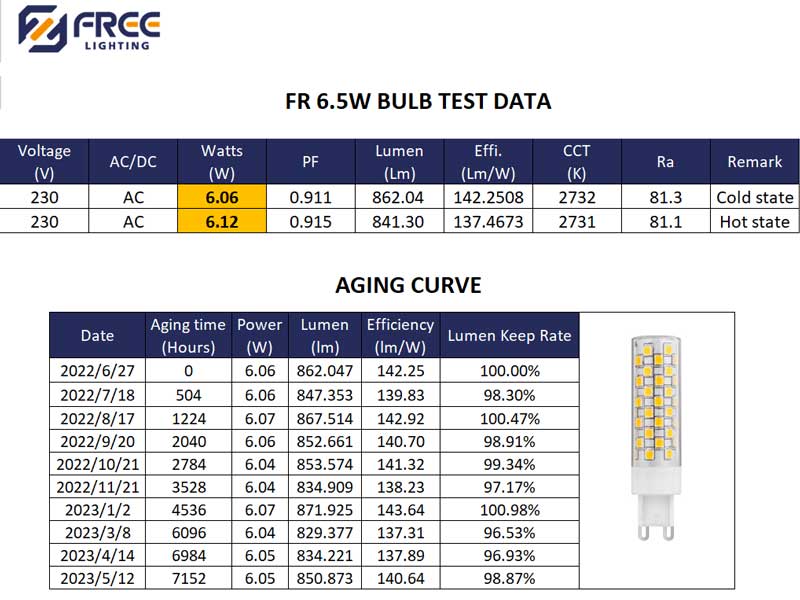
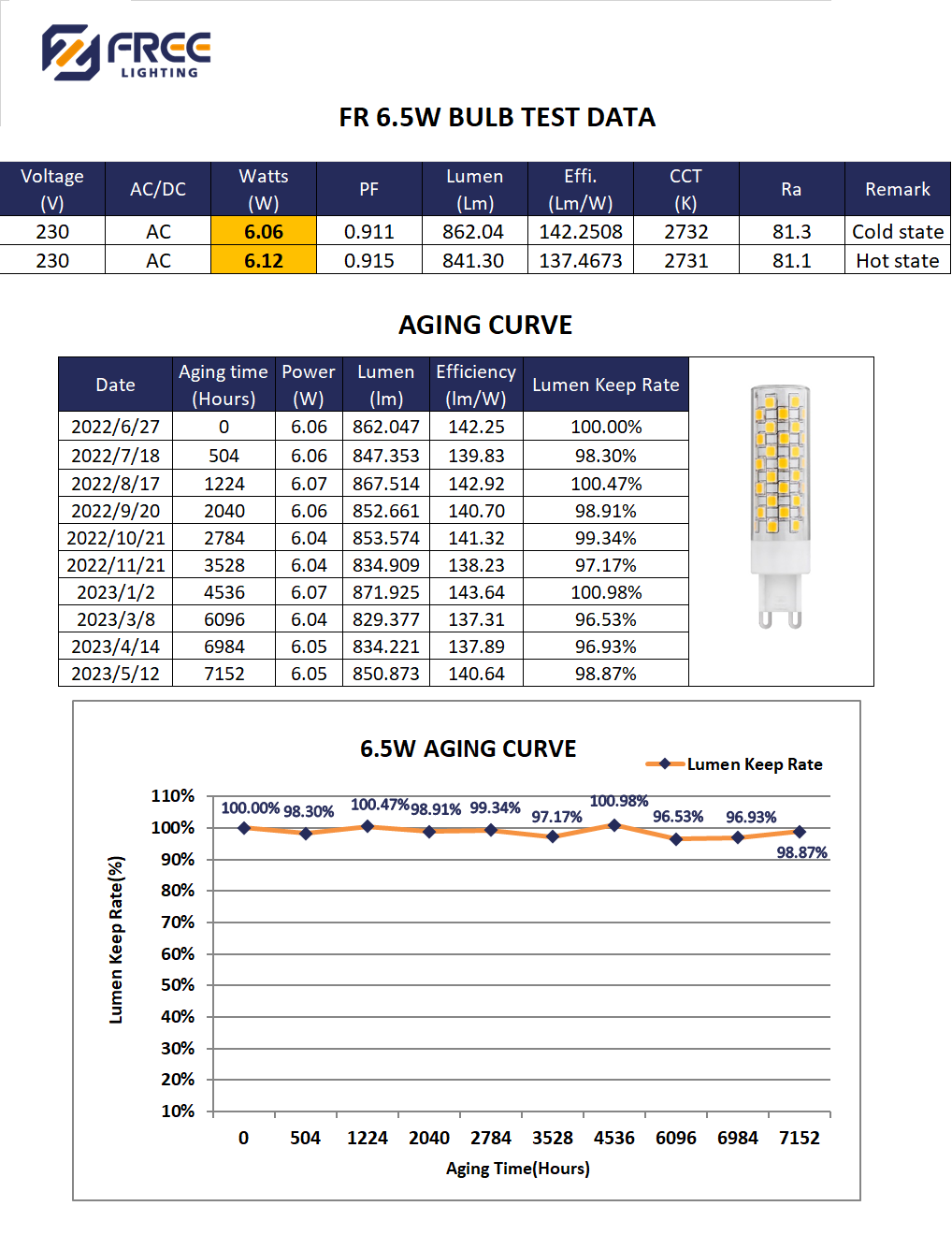
When selecting an LED bulb, one of the key indicators of a high-quality design is how well the bulb maintains its performance when transitioning from cold to hot states. A well-designed LED bulb will exhibit minimal differences in both power and luminous flux between its cold and hot states. This consistency is crucial for ensuring long-term performance and energy efficiency.
Theoretical Foundation for Performance Consistency
The performance of an LED bulb is significantly impacted by its ability to manage heat, which directly affects its power consumption, light output, and overall lifespan. Understanding these basic principles helps us better evaluate how Led Bulbs perform in real-world applications over time.
As the operating temperature of the LED increases, the voltage across the LED chip decreases. This is a characteristic common to most semiconductor materials used in LEDs, such as Gallium Nitride (GaN). As the temperature rises, the LED chip's efficiency in converting electrical energy into light diminishes, resulting in a reduction in both voltage and luminous flux.
According to the formula P = IV, since the current is typically regulated, the decrease in voltage directly leads to a decrease in power output as the temperature increases.
Simultaneously, the internal resistance of the LED increases with rising temperature. While P = I²R suggests that higher resistance could lead to higher power consumption, in practice, the voltage drop typically outweighs the increase in resistance, leading to an overall decrease in power.
This principle explains why poorly designed LED bulbs often show significant discrepancies between their cold-state and hot-state power ratings. For example, consider the following two LED bulbs:
Bulb A: Cold-state power 5W, hot-state power 4.8W.
Bulb B: Cold-state power 7W, hot-state power 6W.
At first glance, Bulb B appears to be more powerful, with a higher cold-state power of 7W compared to Bulb A's 5W. However, long-term testing reveals that Bulb A, with a smaller power difference between its cold and hot states (5W vs. 4.8W), performs better over time. A smaller power difference indicates that Bulb A's design is more effective at managing heat, reducing the risks of thermal damage and lumen depreciation. In contrast, Bulb B, although brighter initially, may suffer more from heat buildup, leading to faster lumen decay and a higher risk of failure.
Long-Term Performance Insights
Having established the theoretical foundation, it is essential to consider how this theory plays out over time in practical applications. Through extensive testing of LED products over hundreds or even thousands of hours, we have observed that bulbs with significant differences in cold-state and hot-state power often exhibit noticeable lumen degradation after just a few hundred hours of operation. This is particularly true for products with poorly designed thermal management systems, which lead to thermal stress on the LED chip and a rapid reduction in light output.
LED bulbs that show a larger difference in power between their cold and hot states not only tend to have shorter lifespans but also face a higher risk of failure under extreme conditions. While these bulbs may appear bright in the short term, they are more likely to lose their efficiency quickly, resulting in higher maintenance costs for users.
External Factors Affecting LED Performance
In addition to internal design, external factors can also significantly impact the performance of an LED bulb. For instance, in real-world applications, LED bulbs are often installed in enclosed or semi-enclosed fixtures. These environments can trap heat, exacerbating thermal challenges and making effective heat management even more crucial. Therefore, it is important for an LED bulb's design to take these external factors into account, ensuring reliable performance even in challenging operating conditions.
Conclusion: The Advantage of Quality Design
As demonstrated, the difference between cold-state and hot-state power is a critical factor in determining the overall quality of an LED bulb. We focus on thermal efficiency in all of our LED product designs, ensuring that our bulbs maintain a low power difference even as they heat up during operation. By optimizing heat dissipation and chip design, we provide products that offer reliable performance over the long term, helping customers reduce maintenance costs and maximize energy efficiency.
When evaluating LED bulbs for your needs, always consider the performance consistency between their cold and hot states as a key indicator of quality. While bulbs with minimal differences in power and luminous flux may have a higher initial cost, they provide significantly greater long-term value in terms of performance, durability, and lower total cost of ownership.